
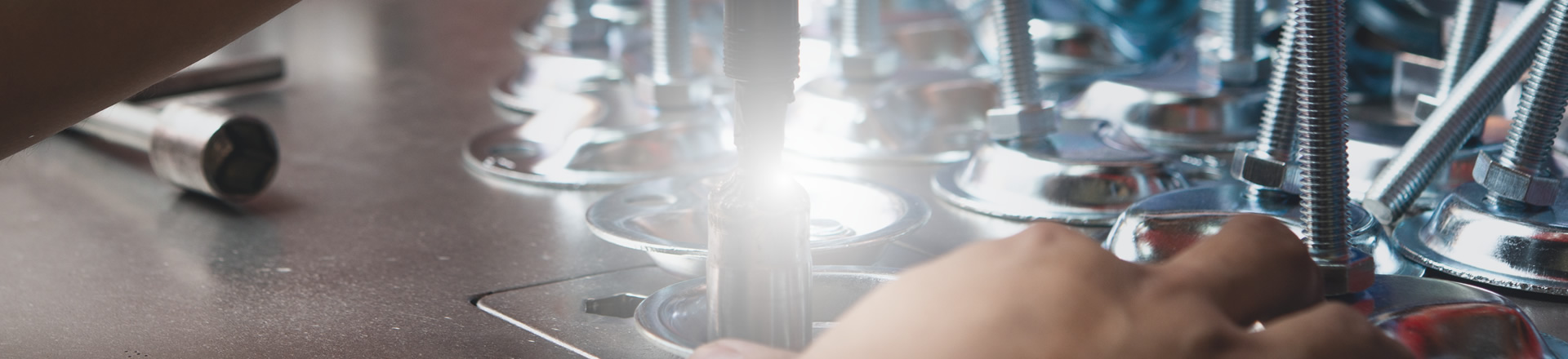
[Case Study] Heavy Racks & Zero Dust? Solving Mobility Challenges in Tech Factories
Between Nanometers and Metric Tons: We Shoulder the Load of the High-Tech Industry
Headlines today are dominated by AI computing breakthroughs and the race toward ever-smaller nanometer processes. These numbers sound futuristic and fascinating. However, for the facility and equipment engineers on the front lines, the reality is much heavier - literally.
As server architecture shifts from air cooling to liquid cooling, the weight of a single rack has surged from 500 kg to over 1.2 or even 1.5 tons (like the GB200 series). Simultaneously, in the semiconductor sector, the pursuit of extreme cleanliness and yield rates has dropped the tolerance for vibration to near zero.
This creates a massive contradiction: Products are becoming increasingly fragile (sensitive to vibration), yet the equipment carrying them is becoming heavier (harder to move).
"How do we safely move these delicate giants without damaging the product?" This has become a critical, invisible risk affecting production yield.
For over 30 years, HICKWALL TECH CASTER has operated across Taiwan's science parks and tech hubs. We have witnessed countless disasters caused by "choosing the wrong wheel" - from AGVs halting production lines due to tire tread separation, to micro-cracks in wafers caused by excessive cart vibration.
Today, we take you inside four real-world scenarios in high-tech facilities to see how Hickwall utilizes four distinct caster technologies to solve mobility challenges for the industry's biggest players.
Case 1:The Space-Weight Paradox in the Cleanroom
[The Hero] Solid Stainless Steel Swivel Brackets + Low-Profile High-Load Wheels
[The Scene] Leading Global Wafer Foundry / Process & Storage Area

Our first stop is the world's most precise wafer foundry. In Class 1 to Class 100 cleanrooms, "space" is the ultimate cost.
The Real-World Dilemma: To accommodate Overhead Hoist Transport (OHT) systems on the ceiling, the height of process tools and storage equipment is strictly limited. The client faced a physical impasse: new generation equipment, integrated with complex systems, exploded in weight to several tons. Logically, they needed larger wheels for support, but larger wheels would raise the machine height, colliding with the OHT. Conversely, keeping small wheels meant standard industrial casters would crush or deform under the load.
Furthermore, cleanrooms have zero tolerance for rust. Standard zinc-plated wheels oxidize and generate particles upon contact with acidic process gases - a fatal blow to yield rates.
Hickwall's Technical Solution: We deployed our "Stainless Steel Solid Swivel Bracket" paired with "Low-Profile High-Load Wheels."
- Low Center of Gravity Structure: These "low-profile" wheels utilize high-density engineering nylon paired with a widened tread. This disperses massive pressure over a small wheel diameter, achieving load capacities of hundreds of kilograms to over a ton per wheel without occupying vertical space.
- SUS304 Full Forging: Instead of weak stamped steel plates, we use solid machined SUS304 stainless steel. This provides absolute corrosion resistance and extreme structural integrity, eliminating metal fatigue and particle generation concerns even under long-term heavy loads.
Case 2:The Battle Against Micro-Vibrations
[The Hero] High-Performance Shock-Absorbing Casters
[The Scene] Major Packaging & Substrate Plant / Inspection Carts

Next, we move to the testing phase. In packaging plants, engineers frequently move precision optical inspection equipment or Front Opening Unified Pods (FOUPs).
The Real-World Dilemma: While most facilities use raised floors or epoxy flooring, structural expansion joints are unavoidable. For a person pushing a cart, the "clunk" over a joint goes unnoticed. But for micron-level probes or ultra-thin wafers onboard, that jolt is a seismic event.
We have seen painful examples where the shock from rigid wheels passing over joints caused instrument calibration to drift. Worse, vibration can cause invisible "micro-cracks" in brittle wafers. These pass initial testing but catastrophically shatter during the high-temperature packaging process later.
Hickwall's Technical Solution: To combat this invisible killer, we introduced Shock-Absorbing Casters equipped with "High-Sensitivity Spring Modules."
- Vertical Shock Absorption: The bracket integrates a precision-calculated spring module, functioning like a luxury car's suspension. When the wheel hits a bump, it retracts upward, instantly absorbing the shock and keeping the payload platform level.
- Dynamic Stability (The "Q" Factor): Cheap damping wheels often fail because springs are too soft (bottoming out) or too hard (ineffective). Hickwall focuses on "Pre-load" tuning, ensuring the spring maintains an active, elastic stroke under load, effectively isolating the equipment from ground vibrations.
Case 3:The Marathon Runner Carrying AI Compute Power
[The Hero] Heavy-Duty Drive Wheels for AGV/AMR
[The Scene] AI Server Assembly Plant / Automated Logistics Area

The scene shifts to a bustling AI server assembly plant. With the advent of liquid-cooled racks like the GB200, unit weights have breached 1.5 tons, turning operations into an endless marathon for Automated Guided Vehicles (AGVs).
The Real-World Dilemma: A manager at a Tier 1 system manufacturer once lamented, "Our AGVs run for a while, and then the wheel tread just peels off!"
The industry term is "De-bonding." The cause is simple: 1.5-ton loads combined with 24/7 non-stop operation. Frequent starting and turning generate immense friction heat. Standard industrial wheels cannot dissipate this heat, causing the bonding agent between the rubber and the wheel core to fail, leading to tread separation. One broken wheel means a stopped production line.
Hickwall;s Technical Solution: For these extreme conditions, we deployed AGV-Specific Heavy-Duty Drive Wheels (the blue wheel in the image).
- Special Polyurethane (PU) Formulation: We use a custom chemical formula designed for dynamic high loads. It features extreme tear resistance and low rolling resistance. Lower resistance means less friction heat, solving the overheating issue at the source.
- Reinforced Bonding Process: During the core sandblasting and adhesive application, we use automotive-grade techniques to drastically increase chemical bonding strength. This ensures the PU layer and metal core remain "inseparable," even under continuous high-temperature operation.
Case 4:The Art of Moving Sideways in Tight Spaces
[The Hero] High-Precision Mecanum Wheels
[The Scene] AI Chip Laboratory / Automated Warehousing

Finally, we visit a crowded advanced laboratory. To fit more computing equipment, aisles are compressed to allow only one person to pass.
The Real-World Dilemma: Engineers at a top AI chip design firm faced a geometric puzzle: They needed AMRs to transport modules to racks, but the aisles were too narrow for traditional AGVs to turn around (insufficient turning radius). Previously, they relied on inefficient and injury-prone manual lifting.
Hickwall's Technical Solution: This is where the "Mecanum Wheel" (the yellow roller wheel in the image) performs its magic.
- Omnidirectional Movement: The wheel surface features spindle-shaped rollers arranged at 45-degree angles. Using vector mechanics and independent wheel speed control, the robot can move laterally ("crab walk"), diagonally, or spin 360 degrees in place.
- Spatial Liberation: The robot no longer needs to turn its head. It can drive up to a rack and slide sideways to dock, shattering physical space limitations.
- Precision Machining: Hickwall uses high-precision aluminum alloy hubs to ensure smooth rolling with millimeter-level positioning accuracy - critical for automated robotic arm docking.
Conclusion: We Have the Solution to Your Pain Points
In the era of Industry 4.0, a caster is no longer just a piece of hardware store consumable.
It can decide whether a multi-million dollar machine enters a cleanroom, whether yield rates drop due to vibration, or if an entire automated line stays operational.
From the solid support of stainless steel low-profile wheels and the delicate care of shock-absorbing wheels, to the endurance of drive wheels and the agility of Mecanum wheels, these four cases represent Hickwall Enterprise’s deep expertise across engineering fields.
We know that clients don't just want a wheel; they want a promise that "once installed, you never have to worry about it again." We are honored to be the power behind the scenes of Taiwan’s tech supply chain, helping engineers solve the logistical nightmares of things being "too heavy, too shaky, or too tight."
If your facility is facing similar challenges, or if you are looking for a mobility solution that matches the quality of your high-end equipment, contact Hickwall today. We have a rich database of field-tested solutions to find the perfect "shoes" for your equipment.
HICKWALL TECH CASTER INDUSTRIAL CO., LTD.
Focus Areas: AGV/AMR Drive Wheels, Mecanum Wheels, Heavy-Duty Industrial Casters, Cleanroom Casters, Shock-Absorbing Casters.
Contact Us: If you have any inquiries, please feel free to reach out. Let's work together to find the ideal caster or leveling foot solution tailored to your industry needs.