
Leveling Feet vs. Leveling Casters: When Should You Use Each?
Industrial equipment must remain stable during operation, but some machines also need to be moved for maintenance, production changes, or workspace reconfiguration. This creates an important selection question: should you use leveling feet or leveling casters?
Although both products help support and level equipment, they serve different purposes. Leveling feet are designed primarily for long-term stationary support, while leveling casters combine mobility with a built-in leveling mechanism. Choosing the wrong option may result in difficult equipment relocation, insufficient stability, unnecessary costs, or reduced operating safety.
This guide explains the differences between leveling feet and leveling casters, their advantages, common applications, and the key factors buyers should evaluate before selecting a support solution.
What Are Leveling Feet?
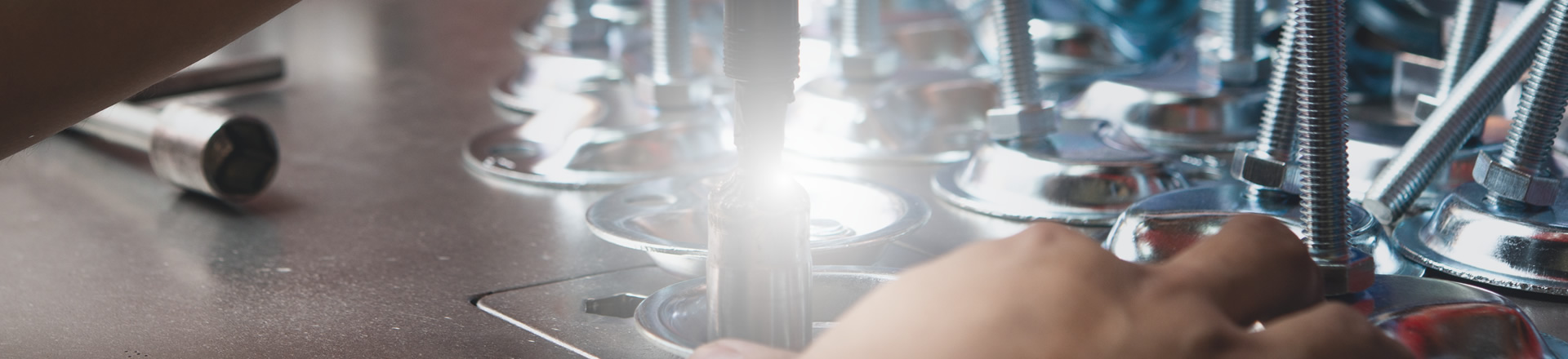
Leveling feet, also known as adjustable feet or machine leveling feet, are support components installed beneath machinery, workstations, cabinets, conveyors, and industrial frames. Their threaded stems allow the equipment height to be adjusted so that it remains level on uneven floors.
Once adjusted, the base of each leveling foot remains in direct contact with the floor. This provides a broad and stable support point for equipment that is expected to remain in one position for long periods.
Depending on the operating environment, leveling feet may be manufactured with bases or threaded stems made from materials such as:
- Stainless steel
- Aluminum alloy
- Nylon
- Rubber or anti-slip materials
- Zinc-plated or coated steel
Some designs also include anti-vibration pads, swivel bases, or non-slip surfaces to improve stability on uneven floors and reduce vibration transmitted from operating machinery.
For a more detailed introduction to their benefits and material options, see Five Key Benefits of Leveling Feet (Adjustable Feet): The Best Choice for Equipment Stability.
What Are Leveling Casters?
Leveling casters combine two functions in a single component: a wheel for equipment movement and an adjustable leveling pad for stationary support.
When the leveling pad is raised, the wheel remains in contact with the floor and the equipment can be moved. After the equipment reaches the desired position, the leveling pad is lowered to support and stabilize the machine. Depending on the design, the pad may also lift some or all of the load away from the wheel.
This dual-function structure eliminates the need to install separate casters and leveling feet. It is especially useful for equipment that normally remains stationary but must occasionally be repositioned.
Leveling casters are commonly used on:
- Automation equipment
- Aluminum-profile workstations
- Testing and inspection systems
- Medical and laboratory equipment
- Semiconductor equipment
- Mobile industrial cabinets
The leveling pad can also help absorb minor vibration and reduce unwanted equipment movement after positioning.
Leveling Feet vs. Leveling Casters: Key Differences
The main difference is not simply whether one product has a wheel. The correct choice depends on how frequently the equipment must move, how stable it must remain during operation, and how the load is transferred to the floor.
| Selection Factor | Leveling Feet | Leveling Casters |
|---|---|---|
| Primary function | Leveling and stationary support | Mobility combined with stationary support |
| Equipment movement | Not designed for direct movement | Equipment can be rolled when the pad is raised |
| Stability | Excellent for equipment that remains fixed | Stable after the leveling pad is lowered |
| Height adjustment | Suitable for precise leveling on uneven floors | Provides leveling and switching between mobile and stationary modes |
| Typical cost | Generally simpler and more economical | Higher due to the integrated wheel and leveling mechanism |
| Best suited for | Permanently or semi-permanently installed equipment | Equipment requiring occasional relocation |
| Typical applications | Machines, conveyors, cabinets, production lines, worktables | Testing systems, mobile workstations, automation modules, medical equipment |
In simple terms, choose leveling feet when stability is the priority and movement is uncommon. Choose leveling casters when the equipment must alternate between stable operation and controlled mobility.
When Should You Use Leveling Feet?
Leveling feet are usually the better option when equipment will remain in a fixed location after installation. Their direct floor contact and comparatively simple construction make them suitable for machinery that requires stable, long-term support.
Choose Leveling Feet When the Equipment Rarely Moves
Machine tools, production lines, conveyors, storage systems, and industrial cabinets may remain in the same position for months or years. Adding wheels in these situations can increase cost and installation height without providing a meaningful operational benefit.
Choose Leveling Feet for Precise Height Adjustment
Uneven floors can cause equipment frames to twist, rock, or become misaligned. Individually adjustable feet allow technicians to compensate for floor variation and establish a level working surface.
Choose Leveling Feet for Vibration-Sensitive Machinery
Equipment that rotates, presses, cuts, measures, or tests components may generate or respond to vibration. A suitable leveling foot with an anti-vibration or non-slip base can help improve floor contact and reduce unwanted movement.
Choose Leveling Feet When Installation Height Is Limited
Because leveling feet do not require a wheel and swivel assembly, they generally occupy less vertical space than leveling casters. This makes them useful for low-profile machine bases and equipment with strict height limitations.
To learn more about their structure, material choices, and role in precision support, read Precision in Stability: Exploring Hickwall Tech's Leveling Feet Mastery.
When Should You Use Leveling Casters?
Leveling casters are appropriate when equipment must remain stable during operation but also needs to be moved periodically. Instead of lifting the machine or using separate transport equipment, operators can raise the leveling pads and roll the unit to a new position.
Choose Leveling Casters for Flexible Production Layouts
Factories increasingly use modular workstations and reconfigurable production cells. Leveling casters make it easier to relocate equipment when production requirements, workflows, or available floor space change.
Choose Leveling Casters for Maintenance Access
Some equipment must be pulled away from walls or adjacent machinery for inspection, wiring, cleaning, or component replacement. Integrated wheels simplify this process, while the leveling pads restore stability after maintenance is completed.
Choose Leveling Casters for Equipment That Must Be Mobile but Stable in Use
Testing instruments, laboratory systems, medical equipment, and mobile automation modules may need to move between work areas. During operation, however, ordinary casters may allow unwanted rolling or movement. A leveling caster provides mobility when necessary and a stable support base after positioning.
Choose Leveling Casters When Separate Components Are Impractical
Installing both traditional casters and independent leveling feet requires additional mounting space and more components. A leveling caster integrates these functions into one compact assembly, helping simplify equipment design.
Key Factors to Consider Before Selection
Choosing between leveling feet and leveling casters should begin with the equipment's actual operating conditions rather than the product name alone.
1. Load Capacity
Calculate the total weight of the equipment and its maximum payload. Do not simply divide the total weight by the number of support points and select an identical rating. Uneven floors, load distribution, movement, impact, and fewer-than-expected contact points can place more weight on individual components.
A suitable safety margin should therefore be included in the selection process.
2. Frequency of Movement
Consider how often the equipment will be relocated:
- Rarely or never: leveling feet are usually sufficient.
- Occasionally for maintenance or reconfiguration: leveling casters may be more practical.
- Frequently throughout the day: confirm that the selected leveling caster is designed for the required movement frequency and floor conditions.
3. Floor Conditions
Smooth concrete, epoxy flooring, tiles, expansion joints, slopes, and uneven surfaces all affect product performance. Leveling feet need an appropriate base diameter and anti-slip design, while leveling casters require suitable wheel materials and sufficient clearance.
4. Vibration and Operating Stability
For vibration-sensitive equipment, evaluate whether the support pad offers adequate surface contact and damping. The required stability level may be different for a workstation, machine tool, optical instrument, or semiconductor testing system.
5. Material and Environment
Moisture, washdowns, chemicals, oil, dust, temperature, and cleanroom requirements influence the appropriate material selection. Stainless steel may be suitable for hygienic or corrosion-prone environments, while nylon, aluminum alloy, rubber, or coated steel may be selected for other conditions.
6. Adjustment Method
Leveling feet are commonly adjusted by turning the threaded stem or nut. Leveling casters may use a thumbwheel, ratchet, or other mechanism. Buyers should confirm that operators can reach and adjust the mechanism after the equipment is installed.
Common Industrial Applications
Automation Equipment
Automation modules may need precise alignment during operation but also require occasional relocation for production changes. Leveling feet are suitable for fixed installations, while leveling casters support modular or movable systems.
Aluminum-Profile Workstations
Aluminum-profile frames are commonly used for worktables, guards, inspection systems, and modular equipment. Leveling feet offer a simple stationary solution, while leveling casters make the workstation easier to reconfigure.
Machine Tools and Production Equipment
Heavy machines that remain permanently installed generally benefit from properly rated leveling feet. When a smaller machine must be moved for maintenance or changes in layout, a suitable leveling caster may offer greater flexibility.
Medical and Laboratory Equipment
Medical and laboratory systems often require both controlled movement and dependable positioning. Leveling casters can help staff relocate equipment and then stabilize it before use.
Semiconductor and Precision Equipment
Precision equipment may require careful leveling, low vibration, and controlled positioning. Product selection should account for the load, required adjustment precision, environmental cleanliness, and relocation frequency.
Logistics and Automated Storage Systems
Support frames, conveyors, control cabinets, and related logistics equipment may use leveling feet for fixed installation. Mobile workstations or service equipment may use leveling casters where repositioning is part of the workflow.
Hickwall Leveling and Mobility Solutions
Hickwall provides a broad range of leveling feet and leveling casters for industrial machinery, automation systems, aluminum-profile equipment, precision instruments, medical applications, and other equipment-support requirements.
Available leveling-foot options include different base materials, threaded-stem materials, dimensions, load ratings, and functional designs. These choices allow buyers to match the support component to the equipment structure and operating environment.
For equipment that requires both mobility and stationary stability, Hickwall's leveling caster range integrates a wheel with an adjustable support pad. After the equipment is moved into position, the pad can be lowered to establish stable floor contact.
Rather than selecting only by product size, buyers should evaluate:
- Total equipment and payload weight
- Number and position of mounting points
- Movement frequency
- Floor condition
- Required adjustment range
- Vibration and stability requirements
- Environmental and material requirements
Hickwall can help customers compare these conditions and identify whether leveling feet, leveling casters, or another support configuration is more suitable for the application.
Conclusion
Leveling feet and leveling casters both improve equipment stability, but they are designed for different operating requirements.
Leveling feet are generally the better choice for machines that remain stationary, require precise height adjustment, or need a simple and stable support structure. Leveling casters are more suitable for equipment that must be moved occasionally and then securely supported during operation.
The correct solution depends on more than load capacity. Movement frequency, floor conditions, installation height, wheel material, vibration, adjustment method, and environmental exposure should all be considered before selection.
Need Help Choosing Between Leveling Feet and Leveling Casters?
Hickwall can help you evaluate your equipment weight, movement requirements, floor conditions, and operating environment to identify the most suitable support solution.
Contact Hickwall to discuss your application and product requirements.
FAQ: Leveling Feet vs. Leveling Casters
1. What is the main difference between leveling feet and leveling casters?
Leveling feet are primarily designed to level and support stationary equipment. Leveling casters combine a wheel for movement with an adjustable pad for stable positioning.
2. Are leveling casters as stable as leveling feet?
A properly selected leveling caster can provide stable support after its leveling pad is lowered. However, the required load rating, pad contact, equipment structure, and operating conditions must all be considered.
3. Can leveling feet be used on mobile equipment?
Leveling feet do not provide mobility by themselves. They may be installed separately from casters, but this requires additional mounting space and a suitable method for transferring the load between the feet and wheels.
4. When should I choose leveling casters instead of standard casters?
Choose leveling casters when equipment must be moved but also needs greater stability after positioning. Standard casters are suitable for mobility, but their brakes do not provide the same leveling function as an adjustable support pad.
5. How should I calculate the required load capacity?
Calculate the combined weight of the equipment and maximum payload, then account for uneven load distribution, movement, impact, and an appropriate safety margin. Avoid assuming that every support point will always carry an equal share of the load.
6. Which materials are available for leveling feet?
Depending on the product and application, leveling feet may use stainless steel, aluminum alloy, nylon, rubber, zinc-plated steel, or coated steel components.
7. Are leveling casters suitable for precision equipment?
They may be suitable when the product's load capacity, adjustment mechanism, support-pad design, and stability meet the equipment requirements. Precision applications should be evaluated carefully before selection.
8. Can Hickwall assist with product selection?
Yes. Hickwall can help customers evaluate their load, mounting, movement, floor, and environmental requirements when selecting leveling feet or leveling casters.